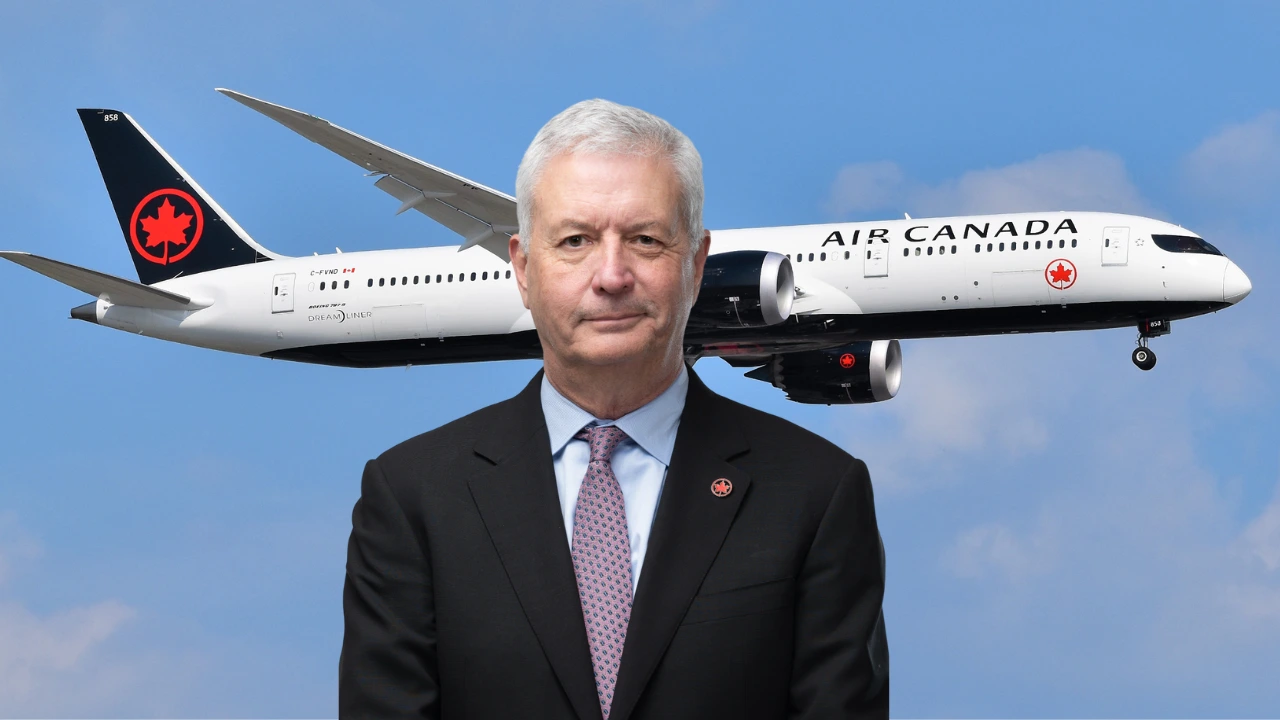
Air Canada CEO Michael Rousseau Retires After Bilingualism Controversy Ignites National Debate
In a development that has sent ripples through Canada's corporate and political landscapes, Air Canada CEO Michael Rousseau is set to retire by October 2026. This accelerated departure comes in the wake of intense public backlash and widespread criticism following his failure to offer condolences in French after a fatal plane crash. The controversy has underscored the profound significance of language in Canadian identity, particularly in Quebec, and highlighted the unique responsibilities of leadership within a proudly bilingual nation.
Rousseau, who took the helm of Canada's flagship airline in February 2021, had been credited with guiding Air Canada through challenging times, including its recovery after a significant flight attendant strike. However, his tenure will now be inextricably linked to a language gaffe that escalated into a national debate about respect, corporate responsibility, and the Official Languages Act.
The LaGuardia Tragedy and Its Unforeseen Linguistic Aftermath
The catalyst for Rousseau's early retirement was a tragic incident at New York's LaGuardia Airport on March 22. An Air Canada Express jet, which had departed from Montreal, collided with a fire truck upon landing. The devastating accident claimed the lives of two pilots – Captain Antoine Forest, a francophone from Coteau-du-Lac, Quebec, and First Officer Mackenzie Gunther – and left dozens injured.
In the immediate aftermath, as is customary for airline executives, Rousseau released a video message expressing condolences to the victims' families. However, this message was delivered almost entirely in English, save for a perfunctory "bonjour" at the start and "merci" at the end. In a country where French and English hold equal official status, and especially given the francophone heritage of one of the deceased pilots and Air Canada's Montreal headquarters, this linguistic oversight was not just a minor misstep; it was perceived as a profound lack of judgment and a failure of compassion.
In the modern era of instant communication and heightened public scrutiny, a CEO's response to a crisis is meticulously analyzed. For a national carrier, the expectation is not merely technical competence but also a deep understanding and embodiment of the country's diverse cultural fabric. Rousseau's video, intended to convey solace, instead ignited a firestorm of criticism, demonstrating how crucial cultural and linguistic sensitivity are in crisis communication.
A Nation's Outcry: Language, Leadership, and Legal Obligations
The reaction to Rousseau's English-only message was swift and uncompromising. Prime Minister Mark Carney condemned the CEO's actions, citing a "lack of judgment" and "compassion." Quebec Premier François Legault went further, openly calling for Rousseau's resignation. Bloc Québécois Leader Yves-François Blanchet described the incident as showing a "sad and gross lack of respect" for Captain Forest's family and the broader francophone community.
This widespread indignation is rooted in Canada's unique linguistic heritage and legal framework. Air Canada, as a federally regulated entity, is bound by the Official Languages Act, which mandates the provision of services in both English and French, guaranteeing the public's right to communicate with the company in either language. Moreover, Air Canada's own internal policies reportedly require employees to be able to communicate in both official languages.
The issue resonates particularly deeply in Quebec, Canada's second-most-populous province and its only predominantly French-speaking one. Language remains an extremely sensitive subject, intrinsically linked to identity, culture, and sovereignty. Historically, dissatisfaction over the perceived dominance of English fueled the rise of the separatist Parti Québécois in the 1970s, a political force that continues to advocate for Quebec's independence. With a provincial election due by October, and polls indicating a potential Parti Québécois victory, the timing of Rousseau's controversy could not have been more politically charged, turning a corporate gaffe into a significant national issue.
While former Alberta premier Jason Kenney offered a defense of Rousseau, suggesting the executive's time would be better spent on operational safety rather than language training, his perspective was largely overshadowed by the dominant sentiment that leadership of a national institution demands proficiency and respect for both official languages.
Beyond the Departure: Lessons for Corporate Leadership and Crisis Communication
The retirement of Michael Rousseau serves as a powerful case study in the complexities of leading a national institution in a bilingual and multicultural nation. His departure, accelerated by the public outcry, underscores that effective leadership extends far beyond financial performance and operational efficiency; it encompasses a profound understanding of and respect for the country's foundational values.
For Air Canada, the immediate task is finding a successor. The airline has already indicated that candidates to replace Rousseau will be judged, in part, on their ability to speak French – a direct and undeniable consequence of this controversy. This shift highlights a critical lesson for corporate boards across Canada, particularly those overseeing federally regulated entities: linguistic and cultural competence are not mere soft skills but essential qualifications for senior leadership roles.
From a crisis communication perspective, several invaluable insights emerge:
- Cultural and Linguistic Sensitivity are Paramount: In a diverse nation, messages must be tailored to resonate respectfully with all key linguistic and cultural groups. A one-size-fits-all approach, especially in times of tragedy, is fraught with risk.
- Authenticity and Empathy Over Rhetoric: Public statements during a crisis must convey genuine empathy. A perceived lack of sincere effort to communicate in a community's language can be interpreted as disrespect, undermining trust.
- Proactive Preparedness: Companies operating in bilingual environments must have robust, multilingual crisis communication plans in place. This includes designated spokespersons fluent in all official languages and prepared to deliver authentic messages.
- Legal Compliance and Ethical Responsibility: Adhering to legal mandates like the Official Languages Act is a baseline. True leadership demonstrates an understanding of the spirit behind such laws – promoting equality and respect.
While Michael Rousseau's tenure also included significant achievements in navigating Air Canada through turbulent operational periods, the circumstances of his departure will undoubtedly shape his legacy. It serves as a stark reminder that for a national flag carrier, embodying the nation's identity and respecting its foundational linguistic duality is as crucial as maintaining flight schedules and financial stability. For further insights into this significant event, you can read more about Air Canada CEO's Retirement: LaGuardia Crash and French Language Backlash and explore Air Canada CEO Rousseau's Legacy: Language, Leadership, and Public Outcry.
In conclusion, Michael Rousseau's retirement from Air Canada marks a pivotal moment, underscoring the enduring power of language in Canadian public life and the non-negotiable expectation for leaders of national institutions to reflect and respect the country's unique bilingual identity. The search for his successor will undoubtedly be watched closely, as Air Canada seeks a leader who can not only steer the airline through operational challenges but also navigate the intricate tapestry of Canadian culture with sensitivity and respect.